Showing posts with label Writing. Show all posts

Monday, June 3, 2024

Getting Series-ous

Well, readers of Periphery are already calling for a sequel.

Ironically, I just finished reading two great books: Legends & Lattes and Bookshops & Bonedust by Travis Baldree. I mention this only because in the author notes for the second book, Travis writes about the struggle to write a sequel to his first book. 

I always read an author's notes as part of my personal goal of learning about the writing process of as many authors as possible, but I must say, I really appreciated his thoughts on this topic given my current project.

Seems he was sure he had the sequel mapped out, but as he wrote it, he really disliked it! He tried again, and again, and if memory serves me, again. Finally, he ended up writing a prequel that, I agree, was a really fun read.

I just really appreciated his honesty about the difficulty in writing another book using the same characters, especially after the first book was really well received. He admits there is a struggle of writing to meet the expectations of your readers.

Well, I am off on another adventure in the kingdom of Periphery. And thank you, Travis, for your candid thoughts!

Friday, May 3, 2024

Energy Boost

Once a week, my writing buddy Laura and I get together to parallel write. It's like our own writer's workshop. We talk a lot about the pieces we are working on, problems we are having, and segments that we are proud of. If one of us gets stuck, we take the time to help the other person out. And with very busy personal schedules, we are guaranteed at least one morning of serious writing time. Often, that time reinvigorates us and we either keep writing when we get home or follow through with more writing the next day. It's like a writing energy boost!

But during that morning writing session, we also have developed another tradition. A breakfast of yogurt parfaits and warm, buttered scones with tea! We figure the yogurt and fruit is healthy and the scones are decadent. We have our favorites: chocolate chunk and cranberry. That serves as another kind of energy boost!

What do you eat or drink while you are writing to keep your energy up?

Tuesday, January 2, 2024

Happy New Year


2024 is here. Time to reflect on last year and set some goals for next year.

In my second year of retirement, it was challenging to carve out writing time, but scheduling writing days with writer-friend Laura has helped a lot. I finished the first draft of Periphery, got it out and back from beta readers, and I am making great progress with the final draft. The sneak peak of the cover art came in just before the new year, and that is so exciting! Kudos to Erin Ruffino, and now it gets handed off to Aaron La Porta for cover design while Erin works on the map for the inside.

I had three very successful author signings, two with the Dollars for Scholars event at Sweet Home High School and one with the Buffalo Historical Society.

I joined Buffalo Niagara Children's Writers and Illustrators and have attended most of their meetings. I am still meeting monthly with my writer's group. And I attended an inspirational writers' retreat in Rochester this summer.

So, overall, I call it a successful year. Although the initial plan was to have Periphery out in 2023, I think it will be a better read for the time spent crafting it.

So, what are the goals for 2024? First and foremost, get Periphery into the hands of readers. After that, a sequel to Periphery might take over, although I did start working on a ballet story for middle grades while my manuscript was with beta readers. I also have a short story in the works, which I think I might try to get entered into some contests. I would also like to add a couple more signings to the schedule this year. 

Here's to 2024 and staying focused!

Tuesday, November 1, 2022

Publishing Series: #9 So You Think You're Done...

Okay. You've written and revised. And revised some more. You're pleased. It sounds good. That manuscript is done! 

Ah, not quite. Now you need to find some beta readers. Three or four should be plenty. They should be people who enjoy a good story. They should also be people you trust to tell you the truth. Their job will be to read your entire manuscript and track their thoughts in the margins. If they have a question, they should write it down. If they are shocked or surprised, they should write it down. They should have a conversation with you and the text in writing in the margins.

Set a date when they should have completed their task and returned the manuscript to you. Then sit down and re-read your story and read their comments. My habit is to spread out at a large table with all the copies in front of me and page through them all at the same pace. I read all the page one comments, then all the page two comments. You get the idea. I also have my writing up on my computer and make suggested changes along the way. Sometimes the beta readers' comments won't help, but if a reader has a question about something they should have the answer to, that is either their fault as a reader or your fault as a writer. You need to figure it out. Having several eyes on the text will help you do that.

If they laugh when you wrote something funny or are shocked when you wrote something surprising, your writing is working. Beta readers can be reaffirming in this way, and they can also help you discover holes in your plot or flaws in your characters.

So what do you do when you have digested all your beta readers' comments? Revise again!

Next Up: Are We There Yet?

Sunday, October 23, 2022

Publishing Series: #8 How Do You Know When You Are Done?

How do you know when a piece of writing is finished?

Good question!

Sometimes you don't. The best advice at this stage of the writing process is to get your writing in front of other people that you respect for their writing talent and that you trust. In most cases this is some sort of writers' group.

I've belonged to a writers' group for about 15 years. The membership has changed over the years -- people drift out as life gets complicated and sometimes drift back in when they enter a period of time to dedicate to writing. Our core group of writers, however, has pretty much remained the same. They are a great group of talented, intelligent, creative people.

We meet once a month and bring a piece of writing to share -- something that we need help with or need to see a response to. Before we read our piece to the group, we try to tell them what we need them to look for. We provide a copy of the piece for each member and they mark up their copy while we read it aloud to them. Constructive criticism runs the gamut from spelling and punctuation errors to word choice and development suggestions.

At one meeting, I brought one of the last chapters of Relic before it was published. After I read, the group was upset. The character of the county historian had been mean to the two young girls in the story, they said. He needed his "comeuppance" -- their word, not mine. All the way home that night, I cursed them out! How could I fit this in? How could I make it happen? By the time I got home, I had figured it out. And to this day, I think it is one of the best parts of the story!

The writers' group has been invaluable in my journey as a writer. Find one near you, or reach out to your local library or indie bookstore and see if there is interest to start one!

Next Up: So You Think You're Done...

Sunday, October 16, 2022

Publishing Series: #7 Revising by Choosing the Right Word

Every word matters.

Believe it or not, writers sometimes agonize about which word to choose. So how do they decide?

First of all, a writer needs to realize that words are defined by both their denotation and their connotation. The denotation is the dictionary definition, but the connotation is the emotion and feeling that goes along with the word. It is the difference between the word "jog" and "flee". Both entail some kind of running, but jogging sounds fun. Fleeing sounds like a person is running from something dangerous. There is a connotation difference.

Every word an author chooses has to add to the tone of the piece, and connotation helps with that.  If nothing else, know if the word you are choosing has a positive or a negative connotation.   If you are writing a battle scene, you don't want words with positive connotations -- unless your character is winning! 

Some people use a thesaurus to help them choose the right word. Sometimes I do. But you can't just choose any word from the list of synonyms. Know the definition of the word, and certainly make sure you know its connotation so that you can decide if it is adding to the piece's overall tone.

Next Up: How Do You Know When You are Done?


Monday, October 3, 2022

Publishing Series: #6 Revising by Adding Description

Description is a tricky beast.

How does a writer decide what to describe and what not to describe? How does a writer know what details to include? 

First, look at events through the eyes of your character. They wouldn't notice everything, only things that were important to them at that moment. The details, then, would help move the plot along. Remember, too, that details aren't always what is seen. Pulling in smells and sounds really bring the setting alive, but again, they need to be important to the action happening at that moment.

Individual word choice at this point can also help bring the story to life. A character could walk, but it is better to choose a more descriptive word. Picture it like a movie in your head. Think about how that character is walking at that moment in the story. Does he stride? Trapse? Skulk? Trot? Determine how their state of mind is materializing through the character's movements. Consider other body movements as well. Where are their eyes looking? What are they doing with their arms? 

And remember, too much description can weigh a reader down.

Next Up: Choosing the Right Word

Sunday, September 25, 2022

Publishing Series: #5 Revising by Adding Dialog

Once you have completed your first draft, there are several ways to begin your revisions.

One of the first places I look for are areas that I can expand with dialog. Dialog shouldn't be there just to have characters talk, however. Good dialog moves the plot along, while at the same time helping to define your characters. 

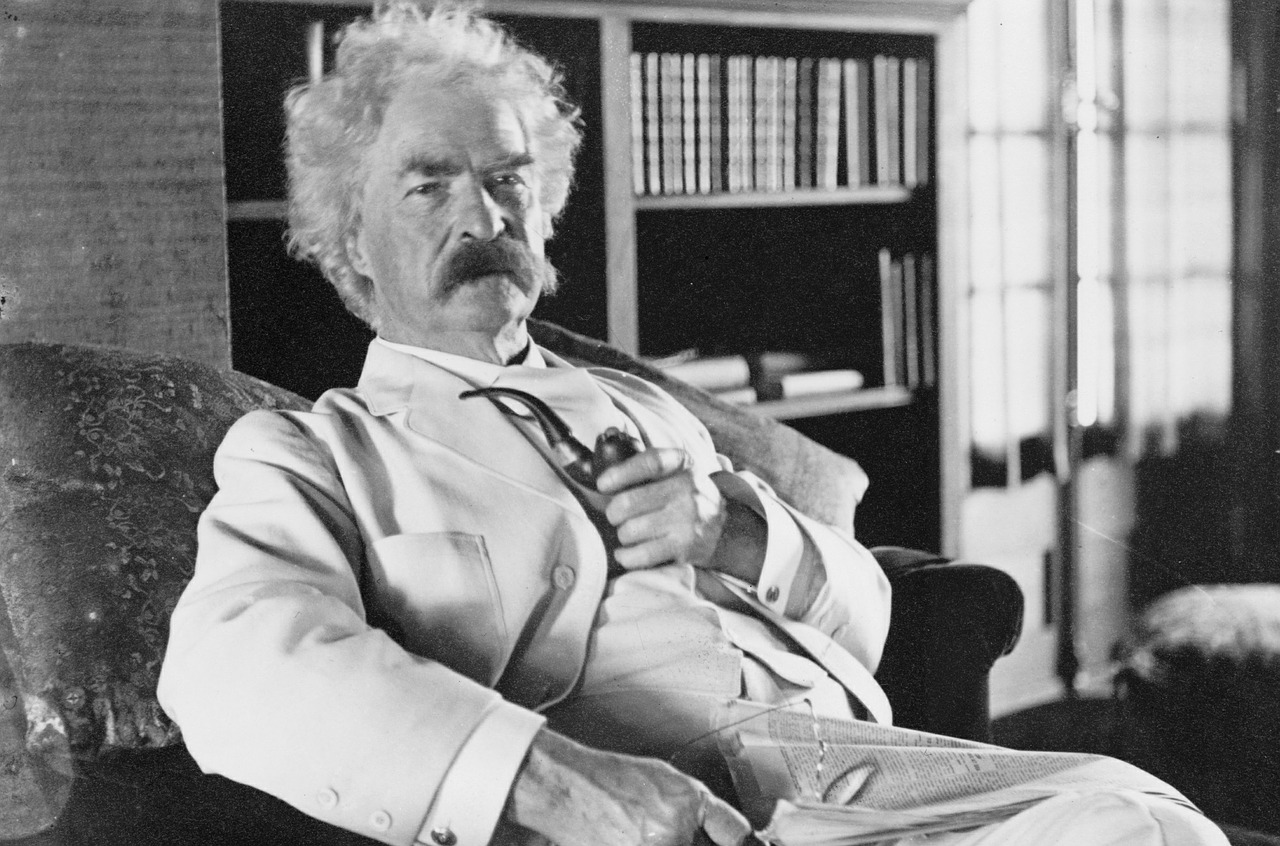
Mark Twain said, "Don't say the old lady screamed. Bring her on and let her scream." What he meant was look for places where you told the reader something. Maybe you say your character was worried or pleased about something. Instead of saying it, let the character say it. It is often why I work to keep characters traveling together, so they have someone to talk to.

And dialog needs to sound authentic. While you are out and about during your day, listen to people talk. Really listen. The spoken language isn't usually stiff and formal. People hem, they haw. They don't speak in complete sentences. And people usually don't monolog. If your characters are having a discussion, don't let one of them take over unless it is essential to the plot, and even then, intersperse it with comments or body language from the other characters.

Remember, each character needs to sound unique. This is where character traits come into play. What is important to that character will come out in what they have to say.

Writing good dialog takes practice. I have often thought that my experience as a reporter has helped my dialog sound authentic. I spent years writing down exactly what people said so I could quote them in articles. I spent time listening to the rhythm and nuances of language and how it was punctuated. It was time well spent.

Next Up: Adding Description


Sunday, September 18, 2022

Publishing Series: #4 The First Draft

 As author Terry Pratchett says, "The first draft is just you telling yourself the story."

That was an absolute stress reliever and eye-opener for me.

When your outline is done, just start writing. At this point you don't need a fancy beginning or a tear-jerking ending. Don't worry too much about correct spellings, punctuation, or capitalization -- although fewer errors in these categories will save you time later. Don't worry about word count or length. Just tell yourself the story.

Push through. Sometimes, I must confess, I combine my first and second drafts, but more about the second draft later.

Don't necessarily even worry about dialog unless you immediately hear the conversation in your head.

There will be many places where your story will be expanded in a second draft -- places to describe, places to add dialog, parts to rearrange.

This doesn't mean do a slipshod job. Tell the story as well as you can. This first draft can take several months to complete, so be patient.

But when you get bogged down, just repeat that mantra: Just tell yourself the story.

Next Up: Adding Dialog

Monday, July 12, 2021

Publishing Series: #2 Developing the Story Idea

Ideas come from everywhere, and chances are, if you are thinking of publishing a story, you already have an idea. My ideas always seem to start with a character, but the setting also plays a big role in the initial stages of my writing. A character idea will come to me, and that character always comes placed in a specific setting.

Developing that idea -- now that is the real work!

Perhaps the entire story magically appears in some writers' minds, but not mine. An initial problem or obstacle, which is somehow dependent on the setting, usually has attached itself to the character. And an ending idea might loom somewhere in the distance, but getting from point A to point Z, takes some planning.

Enter the outline. Different writers have different outlining strategies. And different genres might also call for different outlining techniques. The fantasy book I am writing currently, Periphery, is formulated around Joseph Campbell's Hero's Journey. That plan works for a mythic fantasy, but I never would have been able to use it for my first two novels.

Some writers' outlines include every last detail. Those authors tell me they stick to their outlines come hell or high water. My outlines tend to be looser and more flexible. I tend to think of them as living documents. I might plan to a certain point, then draft, then outline some more, then write some more. Sometimes my stories want to tell themselves to a certain point, and then outlining becomes necessary. Having some form of a working outline, however, allows a writer to pick up their story at any point and write. And that, my friends, is the ultimate cure for writer's block!

Next Up: Another Outlining Strategy

Friday, July 2, 2021

The Publishing Process Series: #1

One of the most frequent questions I am asked is, "How do you get a book published?"

I wish there was an easy answer! Writing is a long process. I once heard someone describe it as being similar to wading through mud. For me, it is more enjoyable than that, but there are parts where the going is slow, and the writer has to put in strenuous effort and perseverance if moving forward is expected. The process is even longer if the writing is a side endeavor, as it is for me right now. Balancing a career, family, and the fun of writing is a tightrope walk, but that might be best handled in another series of entries.

Over the next several entries, I am going to discuss the steps I've found it takes to getting a piece of writing published. Topics will include coming up with an idea, drafting, the role of beta readers, revising, and moving to book form, for starters. The publishing process
might be different for others, and I encourage comments, questions, and others' advice because no one's journey in this endeavor is the same.

Next Up: The Idea

Saturday, February 6, 2021

Periphery in Sight!

Small celebration today!

I just finished the draft of Periphery, my next young adult novel, which is a fantasy adventure. The tree in the photo at the right was the inspiration. I will read it through once more before it is sent off to my team of Beta readers. If I can get it to them within the next month, I will be able to begin work on the sequel, tentatively titled The Amaranth. Depending on the efficiency of my Beta readers, Periphery could see publication within the year. That would be exciting! Summer could entail work on both projects to make sure they flow together. Now if we could get the Covid pandemic under control and author visits would start up again, the world would be a wonderful place! I miss talking with young readers, but with another novel on the near horizon, we’ll have a lot to talk about when the time comes!

Saturday, August 10, 2019

Traveling Characters


Image result for man on a walk
Getting characters from place to place in your story is a tricky thing. Like dialog, description must move the plot, or it risks dragging your readers along in the dust. So, as a writer, you must constantly ask yourself, is describing this trek from point A to point B worth it to my reader? Does something happen along the way to create tension, add to the conflict, or show a character’s evolving nature? If not, then just say it happened. “After four day’s travel, the group arrived” and so on. There is nothing worse than dawn to dusk story telling. Very young writers will do this. It’s called bed-to-bed writing and starts with getting up in the morning, documenting every detail of the day, and ending when they turn in at night. Readers don’t need to know every detail. They are smart enough to assume certain things happen. What they want to know is how is this story moving along? They want to know the key events that will add up to be important in the end. If, in your first draft, you’re not sure yourself – which sometimes happens – remember, it is a draft. You can always go back and eliminate things and add things.

Friday, July 13, 2018

Ah, the Perfect Spot


Here is my new writing place!

I write in many different locations, depending on my mood and work load, but my favorite creative spot for most of the year is the leather recliner in my living room. The problem is that often I need to wait for a quiet time in that room.

But as I sat there the other day, I looked over to where we had moved a library table. You see, several rooms in our house are under construction, and we moved the library table, which normally sits in a rather wide hall, and jammed it into a corner of our living room.

There it sat, empty of its normal decorations and doo-dads. A vast space on which to write! I moved in a stool, and set up shop!

In two days, I have gotten a ton of work done!

So many would-be writers wait for that perfect place, or that perfect time to create. They are sure, that when they finally build that log cabin in the woods, they will write the great American novel. That’s never going to happen, folks.

Find a writing nook, any flat space, and start writing! The perfect space might be right in front of you!

Wednesday, July 4, 2018

Happy 4th!


I am sitting here staring at a beautiful summer sky. I have just gotten out of my pool, I have eaten my grilled hot dog, and I am waiting to see the fireworks. 


As I was doing this, it dawned on me that we are celebrating this great American holiday because of a piece of writing.


It is a piece of writing that could have gotten its signers arrested for treason. It was, and remains, a source of discussion and debate.


The Declaration of Independence is everything a good piece of writing should be. It made people of the time very uncomfortable. It was and still is very controversial. And it continues to stir conversation.


I thank my lucky stars – and stripes – that a piece of writing is so important to my country’s history.


Happy Independence Day!

Saturday, February 3, 2018

Must Read!


I really don’t like self-help books.

The last one I read in its entirety was What Color is Your Parachute? back in the, I don’t know, 1980s?

But, recently, a friend loaned me a copy of Big Magic by Elizabeth Gilbert – the same author who wrote Eat, Pray, Love. I was skeptical of another self-help book and managed to put off reading it until I had nothing left on my “read now” pile.

I am about half-way through and highly recommend it as a must read for you writers out there who say you will eventually write that book. One of her many messages in the book is, cut it out. Start now!

So many of us complain about a lack of time to do what we love – that life gets in the way. But she points out, “Most individuals have never had enough time, and they’ve never had enough resources, and they’ve never had enough support or patronage or reward…and yet still they persist in creating. They persist because they care. They persist because they are called to be makers, by any means necessary.”
So many inspirational passages in this book. I love it!


Friday, September 29, 2017

The Draft is Done!


The draft of “Eye of the Peacock” is now finished. Huzzah!

I’m taking a week to read through one last time to look for silly mistakes before it goes to my team of beta readers. Besides my usual crew, I’ll have three teens on that team, and I’m excited for their input. I’ll be giving them several weeks to read and make their annotations.

Then begins the really tough work: comparing their notes page by page. If they all pin point a problem area, then it’s my job to rework it. Some will also spot some editing mistakes, and I’ll fix those along the way.

The next step is ordering proofs once the cover has been decided. Another team of readers will “red pen” those copies for editing mistakes.

Then it’s off to the publishers!

Friday, August 18, 2017

Have Adventures!


Writing teachers always tell new writers to write what they know. But that’s not exactly true. If it were, we would be so limited. How could you ever write about space travel, if you had never done it? Yet there are science fiction writers out there who have never travelled in space.

As writers, we need to combine what we know with our imagination. But we must also strive for a vast supply of experiences from which to draw. True, research can help fill gaps when writing, but you need to combine the research and imagination with your experiences. To have been there and smelled it and heard it, really helps a writer reach their readers.

My advice: I can’t encourage you enough to go out and have adventures – even if they are close to home. Take photos (your memory will fail you!). Even take notes if you have to – sniff the air, listen as you walk or ride. How would you describe it?
I took this photo on one such adventure this summer and think I will expand the terrain and use it as an environment on a planet in one of my next books!

Thursday, July 20, 2017

Crafting the Ending


Crafting the ending of a piece, I believe, is the most challenging. It is not only the part where all the pieces of a story need to come together, but also the part where the writer needs to re-examine the reason for writing the piece. What was the message you were intending to give to your readers? Has that message been made clear?

So I often find myself going back through on the second draft and looking for places to shore up that message, looking for places where I can insert bits of information that I found necessary to include at the end, tweaking wording to cleverly hint at themes.

And that is what Beta Readers will be for as well – helping me find those holes that don’t exist in my head, but haven’t been made clear on paper.

This is the part that is more than just writing!


Monday, January 2, 2017

First Step


So…

I got a quick start on my 2017 New Year’s resolutions today. Here’s the back story:

At one of my writers’ group meetings last year, I read one of my most recent additions to Eye of the Peacock. I was really pleased with the new character that had to be created to take the story line in the direction it was supposed to go in.

But let’s say it was met with little enthusiasm.

On the drive home, I realized that my fellow writers were correct. I was getting too far away from the original story line. But to cut that part of the plot, I realized the ending of the story would need to be changed as well. And for that to happen, another method for murder had to be considered.

On that quiet drive home it all came together. The cut would have to come and it would have to be drastic. I dreaded it.

So today the cut was made. More than 4,000 words set aside. (I never delete. I may need it someday.) And to go with that cut, highlighting of sections that may need to be rewritten to accommodate the new plot twists.

I have a lot of work to do in 2017.