Monday, October 3, 2022

Publishing Series: #6 Revising by Adding Description

Description is a tricky beast.

How does a writer decide what to describe and what not to describe? How does a writer know what details to include? 

First, look at events through the eyes of your character. They wouldn't notice everything, only things that were important to them at that moment. The details, then, would help move the plot along. Remember, too, that details aren't always what is seen. Pulling in smells and sounds really bring the setting alive, but again, they need to be important to the action happening at that moment.

Individual word choice at this point can also help bring the story to life. A character could walk, but it is better to choose a more descriptive word. Picture it like a movie in your head. Think about how that character is walking at that moment in the story. Does he stride? Trapse? Skulk? Trot? Determine how their state of mind is materializing through the character's movements. Consider other body movements as well. Where are their eyes looking? What are they doing with their arms? 

And remember, too much description can weigh a reader down.

Next Up: Choosing the Right Word

Sunday, September 25, 2022

Publishing Series: #5 Revising by Adding Dialog

Once you have completed your first draft, there are several ways to begin your revisions.

One of the first places I look for are areas that I can expand with dialog. Dialog shouldn't be there just to have characters talk, however. Good dialog moves the plot along, while at the same time helping to define your characters. 

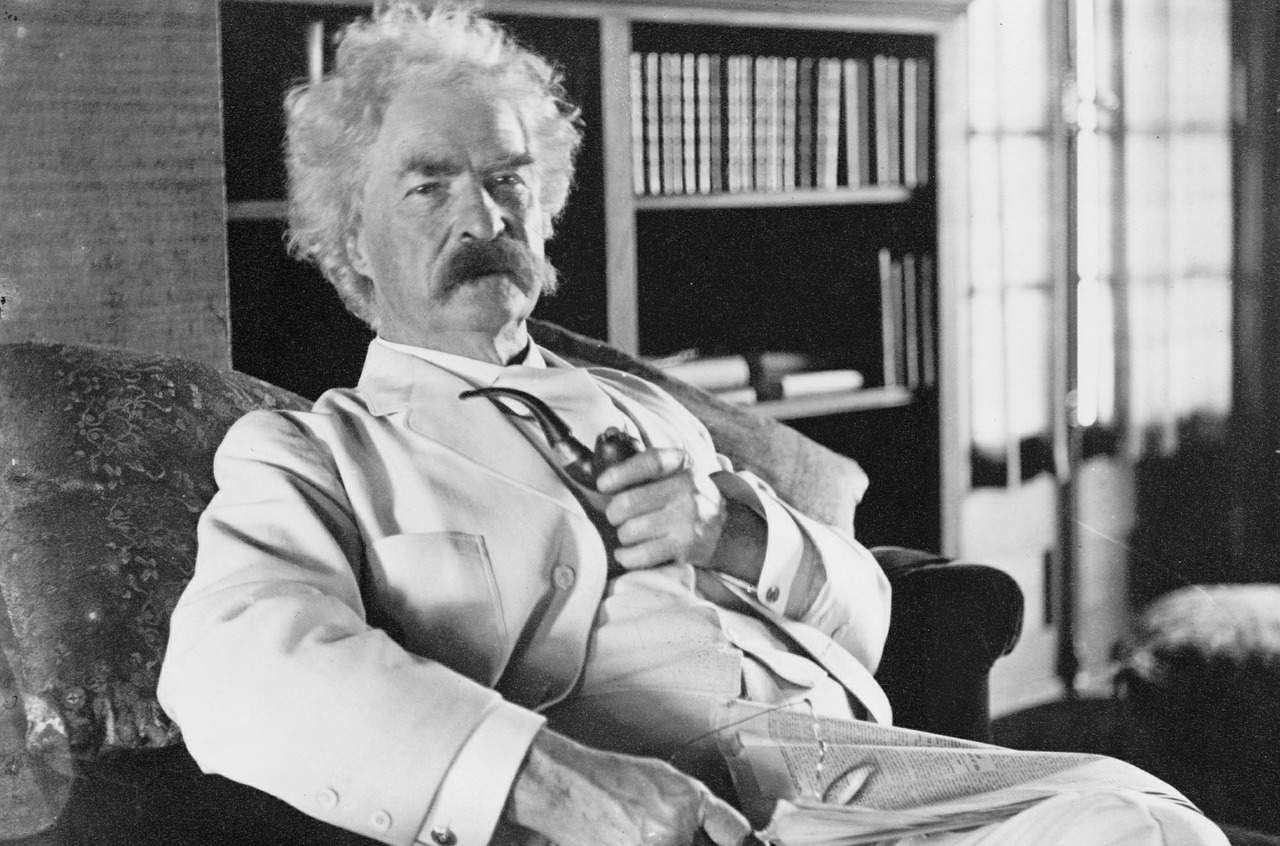
Mark Twain said, "Don't say the old lady screamed. Bring her on and let her scream." What he meant was look for places where you told the reader something. Maybe you say your character was worried or pleased about something. Instead of saying it, let the character say it. It is often why I work to keep characters traveling together, so they have someone to talk to.

And dialog needs to sound authentic. While you are out and about during your day, listen to people talk. Really listen. The spoken language isn't usually stiff and formal. People hem, they haw. They don't speak in complete sentences. And people usually don't monolog. If your characters are having a discussion, don't let one of them take over unless it is essential to the plot, and even then, intersperse it with comments or body language from the other characters.

Remember, each character needs to sound unique. This is where character traits come into play. What is important to that character will come out in what they have to say.

Writing good dialog takes practice. I have often thought that my experience as a reporter has helped my dialog sound authentic. I spent years writing down exactly what people said so I could quote them in articles. I spent time listening to the rhythm and nuances of language and how it was punctuated. It was time well spent.

Next Up: Adding Description


Sunday, September 18, 2022

Publishing Series: #4 The First Draft

 As author Terry Pratchett says, "The first draft is just you telling yourself the story."

That was an absolute stress reliever and eye-opener for me.

When your outline is done, just start writing. At this point you don't need a fancy beginning or a tear-jerking ending. Don't worry too much about correct spellings, punctuation, or capitalization -- although fewer errors in these categories will save you time later. Don't worry about word count or length. Just tell yourself the story.

Push through. Sometimes, I must confess, I combine my first and second drafts, but more about the second draft later.

Don't necessarily even worry about dialog unless you immediately hear the conversation in your head.

There will be many places where your story will be expanded in a second draft -- places to describe, places to add dialog, parts to rearrange.

This doesn't mean do a slipshod job. Tell the story as well as you can. This first draft can take several months to complete, so be patient.

But when you get bogged down, just repeat that mantra: Just tell yourself the story.

Next Up: Adding Dialog

Sunday, September 11, 2022

Publishing Series: #3 More on Outlining

You have your idea.

No matter how well you think you know your story, some type of outlining is a must. I know -- Stephen King swears he does not use an outline, but face it. We're not Stephen King. If the hero's journey won't work for you, look for another style of outline. There are tons of them out there.
A writer friend of mine, Martin Wilsey, uses the following one. I like it and referred to it -- although I don't think I used it faithfully -- in my first two novels.

1. Fill in the blanks:  When [INCITING INCIDENT OCCURS], a [SPECIFIC PROTAGONIST] must [OBJECTIVE], or else [STAKES].

2. Write a paragraph describing each part:
   a. The Setup
   b. Rising Action
   c. The Resolution

3. Now break down the 3 parts by bulleting points under each of the acts below.
The Setup: (Start with your paragraph from above)
    Act 1 - The Setup
    Act 2 - Something Bad Happens
    Act 3 - The Protagonist/Antagonist Identified
The Rising Action: (Start with your paragraph from above)
    Act 4 - The Push - The Door to Act 5 (It's a one-way door, no turning back)
    Act 5 - Go for the wrong goal
    Act 6 - Reversal - It is the low point, reveals the Achilles heel of the nemesis
Resolution: (Start with your paragraph from above)
    Act 7 - Go for New Goal - The clock is ticking - protagonist has a new plan.
     Act 8 - Wrap it Up, New goal is achieved.
     Act 9 - The denouement. Closure. The End.

I personally love Act 4 and 5 -- the no turning back and going for the wrong goal. It adds much needed tension to a story line.

Just remember, whatever outline model you choose, there is no reason to follow it faithfully. If you closely examine any of the Harry Potter stories, it is clear J.K. Rowling used the Hero's Journey outline, but there are events that are rearranged or missing. That's okay. As long as it works in the end!

Next Up: The First Draft


Monday, July 12, 2021

Publishing Series: #2 Developing the Story Idea

Ideas come from everywhere, and chances are, if you are thinking of publishing a story, you already have an idea. My ideas always seem to start with a character, but the setting also plays a big role in the initial stages of my writing. A character idea will come to me, and that character always comes placed in a specific setting.

Developing that idea -- now that is the real work!

Perhaps the entire story magically appears in some writers' minds, but not mine. An initial problem or obstacle, which is somehow dependent on the setting, usually has attached itself to the character. And an ending idea might loom somewhere in the distance, but getting from point A to point Z, takes some planning.

Enter the outline. Different writers have different outlining strategies. And different genres might also call for different outlining techniques. The fantasy book I am writing currently, Periphery, is formulated around Joseph Campbell's Hero's Journey. That plan works for a mythic fantasy, but I never would have been able to use it for my first two novels.

Some writers' outlines include every last detail. Those authors tell me they stick to their outlines come hell or high water. My outlines tend to be looser and more flexible. I tend to think of them as living documents. I might plan to a certain point, then draft, then outline some more, then write some more. Sometimes my stories want to tell themselves to a certain point, and then outlining becomes necessary. Having some form of a working outline, however, allows a writer to pick up their story at any point and write. And that, my friends, is the ultimate cure for writer's block!

Next Up: Another Outlining Strategy

Friday, July 2, 2021

The Publishing Process Series: #1

One of the most frequent questions I am asked is, "How do you get a book published?"

I wish there was an easy answer! Writing is a long process. I once heard someone describe it as being similar to wading through mud. For me, it is more enjoyable than that, but there are parts where the going is slow, and the writer has to put in strenuous effort and perseverance if moving forward is expected. The process is even longer if the writing is a side endeavor, as it is for me right now. Balancing a career, family, and the fun of writing is a tightrope walk, but that might be best handled in another series of entries.

Over the next several entries, I am going to discuss the steps I've found it takes to getting a piece of writing published. Topics will include coming up with an idea, drafting, the role of beta readers, revising, and moving to book form, for starters. The publishing process
might be different for others, and I encourage comments, questions, and others' advice because no one's journey in this endeavor is the same.

Next Up: The Idea

Saturday, February 6, 2021

Periphery in Sight!

Small celebration today!

I just finished the draft of Periphery, my next young adult novel, which is a fantasy adventure. The tree in the photo at the right was the inspiration. I will read it through once more before it is sent off to my team of Beta readers. If I can get it to them within the next month, I will be able to begin work on the sequel, tentatively titled The Amaranth. Depending on the efficiency of my Beta readers, Periphery could see publication within the year. That would be exciting! Summer could entail work on both projects to make sure they flow together. Now if we could get the Covid pandemic under control and author visits would start up again, the world would be a wonderful place! I miss talking with young readers, but with another novel on the near horizon, we’ll have a lot to talk about when the time comes!